

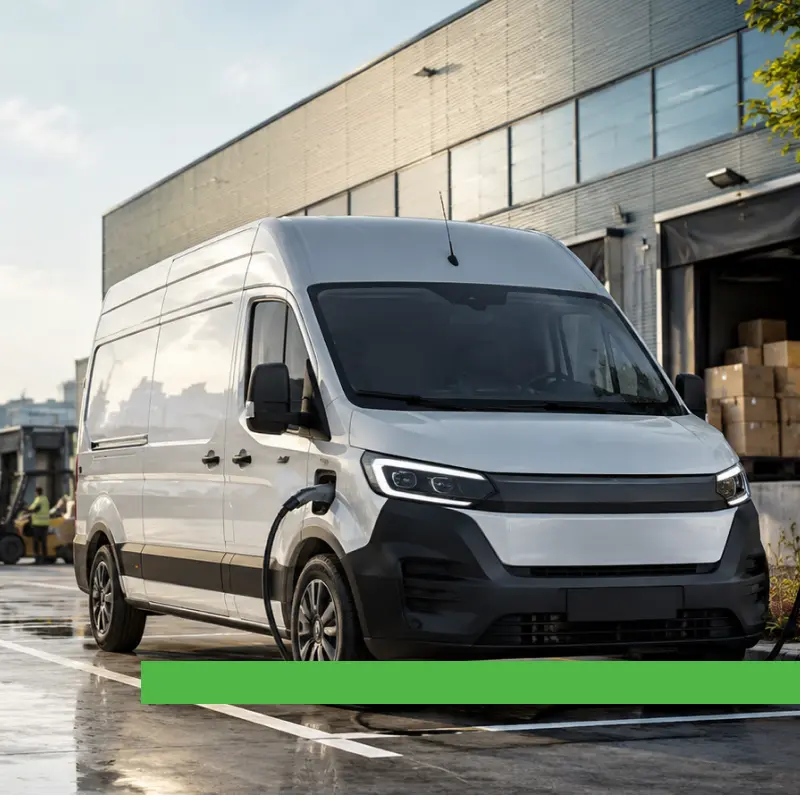
Vans and light commercial vehicles are essential parts of the modern economy. They are used in goods transport, service operations, spare parts delivery, small and medium-sized business activities, and industrial and automotive supply chains. These vehicles often work in the background, but they have a direct impact on how efficiently, reliably and predictably companies can operate.
According to a recent industry analysis by ACEA, the electrification of vans in Europe is still lagging behind. While the market for electric passenger cars is gradually gaining momentum, the share of electric models among light commercial vehicles remains significantly lower. This is an important automotive trend because the transition of corporate fleets, logistics providers and manufacturing companies is not simply a matter of replacing vehicles. It requires a broader operational shift.
The electrification of light commercial vehicles is progressing more slowly because these vehicles are used very differently from passenger cars. In the case of a van used for business purposes, the purchase price or driving range is only part of the decision. Companies also need to consider whether the vehicle can be integrated into daily operations. Load capacity, charging time, availability, operating costs, service support and suitability for daily logistics needs all play a key role. In a manufacturing or supplier environment, delays, downtime or unpredictable charging schedules can directly affect business operations.
Charging infrastructure is also a crucial factor in the spread of electric commercial vehicles. For a privately used electric car, home or workplace charging may often be sufficient. For a corporate fleet, however, the situation is far more complex. Several vehicles may need to operate at the same time, often on tight schedules and predefined routes. This requires infrastructure that is not only available, but also reliable and predictable from a business perspective.
For automotive suppliers and industrial service providers, this trend is particularly important. The spread of electric powertrains brings new component requirements, new quality control points and new technical competencies. In the future, solutions related to batteries, electronics, wiring, sensors and software-based systems are likely to become increasingly important. At the same time, traditional quality assurance expectations will not disappear. In fact, as new technologies emerge, precise, consistent and reliable processes will become even more critical.
The electrification of light commercial vehicles may also transform industrial logistics. It is not enough to simply replace existing vehicles with electric models. Companies need to rethink route planning, charging cycles, site infrastructure, energy consumption and total cost of ownership. This is especially important for businesses operating in automotive, manufacturing or supplier environments, where deadlines, quality and process reliability are essential.
Although the electric transition of light commercial vehicles is currently moving more slowly, this area also offers major opportunities. Companies that prepare in time for new requirements may gain a competitive advantage. In the automotive industry of the future, success will not depend only on the technologies a company uses, but also on how flexibly, efficiently and quality-focused it can adapt to a changing operating environment.
The electrification of vans and light commercial vehicles is therefore not only a transport-related issue, but also an important automotive and industrial trend. It affects manufacturing, supply chains, logistics, quality assurance and overall corporate operations. One of the major tasks of the coming years will be to ensure that technological development, infrastructure, regulation and business practice progress in harmony. Automotive companies, suppliers and industrial service providers will all have an important role to play in this transition.
Source:
ACEA – Vans: Europe’s decarbonisation blind spot
https://www.acea.auto/message-dg/vans-europes-decarbonisation-blind-spot/